
Run Dry
What we're exposed to, and whether we have the time to absorb it, decides how well we think, work and live.
We like to tell ourselves the barriers to the arts have fallen. Everything's a tap away now, every album, every book, a gallery in a search bar. The rest, the story goes, is up to you.
But that story glosses over something a lot of people don't have: the time to absorb any of it.
Access and absorption are not the same thing, and absorption depends on the resource that's most unevenly shared of all. Time. You can be surrounded by culture and take in almost none of it, because genuinely taking something in asks for slowness, attention and unhurried hours. For some, those hours are scarce by circumstance: second jobs, caregiving, the relentless arithmetic of getting by. For others, they exist but never get claimed, swallowed by a calendar that treats every gap as something to fill.
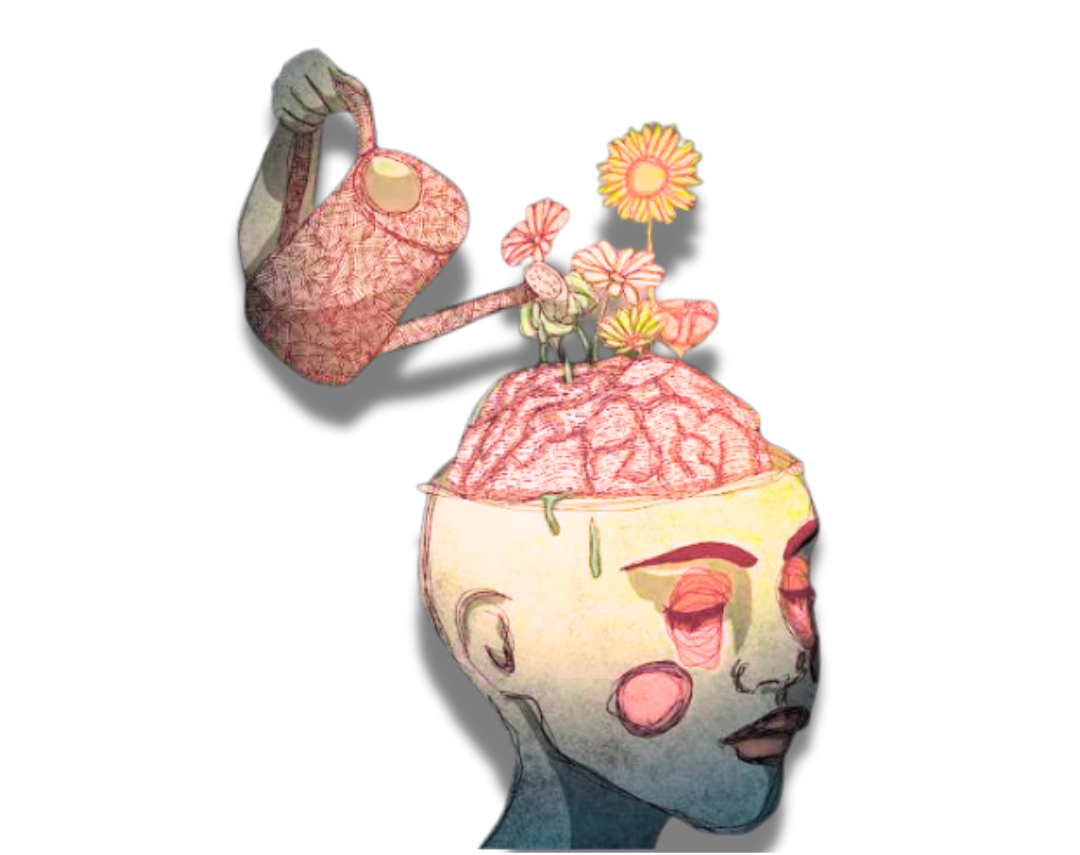
Either way, the result is the same. A reservoir running low.
Because everything we produce is downstream of what we let in. The metaphor a leader reaches for, the analogy that unlocks a stuck problem, the instinct that tells you this isn't right, none of it comes from nowhere. It's drawn from everything we've read, watched, heard and felt. And too few of us are refilling that reservoir, whether because the time isn't there or because we never thought to protect it.
We built Work Time Revolution on a simple principle: value over volume. Do fewer things, better. We usually apply it to work. But it applies just as sharply to what we take in, and to who gets the chance to take anything in at all. We've built a culture that floods everyone with content and grants almost no one the time to absorb it.
A well that's only ever drawn from runs dry.
Data Snapshot 📊
The idea that the arts are a luxury, lovely but optional, collapses the moment you look at the evidence. Slowing down to genuinely engage with art doesn't just make life richer. It measurably changes how long we live, how well we think, and how good our work is.
📚 Readers live longer. A Yale study following 3,635 adults over 50 for twelve years found book readers had a 20% lower risk of dying than non-readers, a survival advantage of nearly two years. Just 30 minutes a day was enough, and the benefit ran specifically through deep cognitive engagement. (Bavishi, Slade & Levy, Social Science & Medicine, 2016)
🎭 So do gallery-goers and concert-goers. A 14-year UCL study of 6,710 older adults found that engaging with theatre, concerts, museums or exhibitions even once or twice a year was associated with a 14% lower risk of dying, with more frequent engagement linked to greater protection still. (Fancourt & Steptoe, BMJ, 2019)
🧠 The evidence is not thin, it's vast. The World Health Organization reviewed more than 3,000 studies and concluded that the arts play a major role in preventing illness, promoting health and managing disease across the entire lifespan. One of the most robust and least-discussed findings in public health. (Fancourt & Finn, WHO, 2019)
🌌 Awe rewires the body. Experiences of awe, triggered by music, art, nature or a breathtaking performance, are linked to lower inflammation, reduced stress, greater generosity, and, remarkably, the feeling of having more time. The very resource we all claim to be short of, replenished by the thing we cut first. (Keltner and colleagues; Rudd, Vohs & Aaker, Psychological Science, 2012)
🏆 The most creative minds are the most artistic. Nobel laureates in the sciences are dramatically more likely than their peers to have a serious arts pursuit: roughly seven times more likely to draw or paint, twelve times to write, twenty-two times to perform. They don't treat these as distractions from the work. They describe them as the source of their best ideas. Einstein said music was the driving force behind the intuition that produced relativity. (Root-Bernstein et al., 2008)
The arts are not the reward you earn after the real work. Increasingly, they're the raw material of it.
Why this matters for your team right now 🎓
When life speeds up, the things that ask for slowness are the first to go.
Most people don't decide to stop reading, or sitting with music, or visiting the exhibition. Those things just fall off the edge of a day that's too full. They feel optional in a way a deadline never does. So the urgent crowds out the nourishing, and we call it being busy, or responsible, or realistic.
For those with some control over their time, this is a prioritisation problem more than a time problem. We find the hours for what we've decided matters; the real question is whether we've decided depth is worth protecting, or filed it under "someday."
But for a lot of people, there's no choice in it. When work swallows the evenings and creeps into the weekend, and the week holds no slack at all, the hours to take anything in simply aren't there. You can't discipline your way out of that. It's one of the real costs of overwork: people are left with no room for the things that make life fuller, and it tends to fall hardest on those who had the least room to begin with.
There's a deeper point here about attention, not just access. Harvard art historian Jennifer Roberts asks her students to sit with a single painting for three full hours before reading a word about it. It took her own trained eye forty-five minutes to notice a detail that later became central to her published interpretation of the work. Her lesson: access is not absorption. Just because you've looked at something doesn't mean you've seen it. What turns looking into seeing, exposure into insight, is time and patience, the two things a hurried culture refuses to grant.
The same is true of people and teams. A team running flat-out, attention sliced into fragments, taking in everything and absorbing nothing, will produce a great deal of work and very little of value. Slowing down isn't the opposite of performance. For the kind of thinking that cuts through and generates value, it's the precondition for it.
This is a critical leadership challenge. Is work designed in a way that affords your people real room to slow down and take in something worth thinking about?
6 ways to refill the well, for yourself and your team 💡
These aren't perks. They're the conditions that make good thinking and a fuller life possible.
1. Decide it matters, then defend it. Time follows priority. For the time that's genuinely yours to shape, block space to read, listen or go and see something, and protect it the way you'd protect a meeting with your most important client. Half-defended time gets eaten alive.
2. Practise slow looking and deep reading. One work. One screen. No second tab. The benefit lives in the depth, not the count. Twenty undistracted minutes with a single painting, essay or album beats skimming ten. You're training the muscle of immersive attention, the same one that lets you see what others miss in a problem.
3. Read fiction, not just the business shelf. Literary fiction does something no management book can: it puts you inside another mind. That's the exact skill that underpins leadership, negotiation and collaboration: perspective-taking, reading what's unspoken. A novel is a flight simulator for human complexity.
4. Go looking for awe, on purpose. A live concert. A film in a cinema, not on a phone. A gallery, a cathedral, a mountain. Awe is the input with the highest return: lower stress, an expanded sense of time, more generosity toward others. Build one genuinely awe-inducing experience into the month and make it non-negotiable.
5. Make it shared, and make it possible. A team gallery trip on work time. A book the whole team reads and argues about. A standing "what moved you this month?" question in a team meeting. Doing it together turns absorption from a private indulgence into a collective habit, and doing it on the clock makes it available to the people who'd never find the time on their own.
6. Resist the urge to optimise it. The moment art becomes "content" to get through at double speed, the point of it is lost. Keep it slow, and keep it yours.
Takeaways 💡
Where we have the choice, depth loses by default, not because it matters less, but because nothing defends it.
Output is what you produce. Input is what makes the output worth producing.
The arts aren't time off from a full life. They're a large part of what makes one.
Access is not absorption. Seeing takes time, and time is the most unequally shared resource we have.
The most creative people aren't the ones who consume the most. They're the ones who absorb the most deeply.
A well that's only ever drawn from runs dry. Refilling it isn't indulgence. It's essential maintenance.
Ready to build work that leaves room to think? 🚀
Performance and depth aren't enemies, and the time for a fuller life shouldn't be a perk reserved for the few who can already afford it. The organisations that do the best work are the ones that design it so people have the room to slow down, take in something real, and bring it back to what they do, rather than running ever faster on the same spot.
That's the work we do: helping organisations prioritise what actually creates value, and design work that gives people, not just the privileged few, the time and space for the things that make life, and their thinking, worth more.
👉 Explore our approach
💬 Every revolution starts with a conversation.
